

Do you think you are creative ??


That was the question of the evening (October 30th) as we headed to the Helix, for our first conference: GET CREATIVE.We had the opportunity to listen to 8 incredible speakers, each bringing different opinions and experiences on creativity. Joan was our MC for the night. She did an excellent job engaging with the audience and getting us, the students to think of questions for the speakers while getting that creativity wheel turning inside all of us.
Our speakers ranged from business graduates to artiest to dcu students to song writers. These speakers included
- Aisling Cowzer, Accenture Digital
- Tania Banotti, Creative Ireland
- Patrick Hickey, Rothco
- Joanne Looby, Diageo
- Ailbhe Keane, Izzy Wheels
- Mark Bennett, Talent Gardens
- Akhil Voorakkara, Engineering student DCU
- Brian Dillon, Song writer.
Even though each speaker brought unique ideas and experiences, for this blog post I will only be discussing 3 speakers. (Don’t be too disappointed we still have 2 more conferences to go!!)
Aisling Cowzer, Accenture Digital.
Aisling Cowzer’s Linkedin

Lets start off with some background information. Cowzer studied in Trinity College Dublin earning a BA in Business & Computing. After her degree Aisling knew she did not want to work in high tech computer industry. Aisling always believed she was not artistic (even her family believed that too!) So when she was approached by Accenture for the position of ‘Experience Strategy & Digital Transformation Manger’. She was apprehensive due to the fact she believed she was not creative. However, once Aisling got rid of her negative mindset, the rest was history.
Aisling Cowzer’s quote on the night has made a permanent indent in my mind “Design is never done”. These simple words ring through but also sum up her subject matter of ‘How we use design-thinking’. Cowzer explained there are many steps in design thinking for Accenture employees. One must understand the business goal – what does the client want ?! They must understand what the relationship is like with both parties i.e. Customer and business. Aisling used a perfect example. She compared the relationship between the Tax Revenue Office and ASOS with their customers. Customers do not want constant interactions with revenue, they want a one point interaction and that is final. However, ASOS want constant interaction with their customers, updating and rewarding customers as much as possible. Therefore, for Cower’s design thinking process to work they must fully understand their clients for their creativity to begin.
Design Thinking Tools
Aisling went into the finer details of creativity and how she went from a girl with little to no talent/interest in art to become a leading manager in creativity. It all comes down to their design thinking tools, talent is not the main element. Everyone is capable of creativity. We all have it, we just need some guidance at times. Accenture Digital follows three simple aspects- looking, understanding and making when a client has brought forward a project which is classed as a ‘problem’ for the Accenture Digital team. The whole back bone of these processes is to bring the people into the center, get them connected. To begin they start with the problem in the middle and work their way outwards.
- The Looking element does just that. They interview the client – see what they need, they then market research- go out into the field and ask the customers what their opinions are of their clients and what segment of the market do they slot in to.
- Next is the understanding element. Once again people are at the forefront of the project. Aisling explained how they use ‘persona profile’ this is based on human needs, human concentric and human representation. This increases the consumer knowledge and thus increases the creativity.
- Finally the making process. Here Accenture do a round robin which each employee inputs their way in how to complete the task. Each section is an advancement on the other, which in the ends creates a well rounded successful project. This is known as the Double Diamond method.
- Double Diamond method

In my opinion, Aisling Cowzer was an excellent speaker. Her words really appealed to me, as I can identify with her insecurities of not being talented in art or design. Her words now give me confidence to go forward with designs, don’t hold back and understand there are successful problem solving processes which help get the creative juices flowing. Finally with regards to Cowzer’s quote “design is never finished” it opens a new mindset for myself. It teaches us that we are never finished, our creativity is always expanding, improving and becoming more important. Even if we feel we have completed the task. There is always an old one wanting to be improved.
Tania Banotti, Creative Ireland (CI).

Tania Banotti is the Director of the Creative Ireland Programme (2017-2022). This is a Government run initiative to help increase the people of Ireland’s creativity. This programme has 5 key ‘pillars’. Each pillar tackles a different aspect of creativity. It ranges from schools and children to the historical buildings associated to the arts.
Pillar 1: Creative Youth.
This is one of the key features of this programme. Banotti talked about how each child is now given the chance to grow and develop their creativity. 150 Schools and 62 Clusters are pilot schools for CI. Here these schools will test out ways to learn with art, increase the imaginative power within children and thus, allow them to grow in confidence and creativity.
Cruinniu na nOg is a festival created and funded by CI. It is known as “A day of creative activities for children”. Children from across the country get to show case their talents, participate in arts and crafts and simply just enjoy being creative. The link below will bring you directly to the main website of Cruinniu na nOg.
Pillar 2: Creative Communities
This section of CI is to get everyone involved. We have the schools it’s now time to get the communities involved. Banotti has creative plans for the whole of Ireland. Banotti explains how “one third of the budget” will help fund the 31 creative Ireland coordinators along with the 5 year plan for the cultural creativity to be rolled out in all local authorities. This is to help each area improve its creativity. CI are not just focused on children. It is their goal to get all ages involved and get the creativity flowing from everyone.
Pillar 3: Cultural and Creative Industries
This is the biggest and largest part of the programme. It has been granted €725 million to refurbish national buildings i.e. Abbey Theater, National Archives and the National Concert Hall. This is known as project 2040. Here it explains in more detail of the extensive plans to help make Ireland a more Creative country. Project 2040
Pillar 4&5: Creative Industries and Global Reputation
Pillars four and five were founded to help the artiest of our country and the media outlets. CI and Banotti want to fund the film, audio, graphic design industries to help them gain publicity ans support. The likes of RTE is in much needed support to rain competitive as a broadcasting company, especially with the unpredictable brexit negotiations.
To conclude I believe Banotti has founded an excellent programme in which we can see the whole country prosper. Banotti is a powerful speaker who made me open my eyes to the range of sections which are classed as creativity, it is not just limited to creating a piece of work. It’s the companies that produce these products. It is not just a person. Creativity has a wide ranging family and it does not stop once you have outgrown the title of ‘child’. The various speakers have continued to change and improve my overall knowledge of the team CREATIVITY.
Ailbhe and Izzy Keane, Izzy Wheels
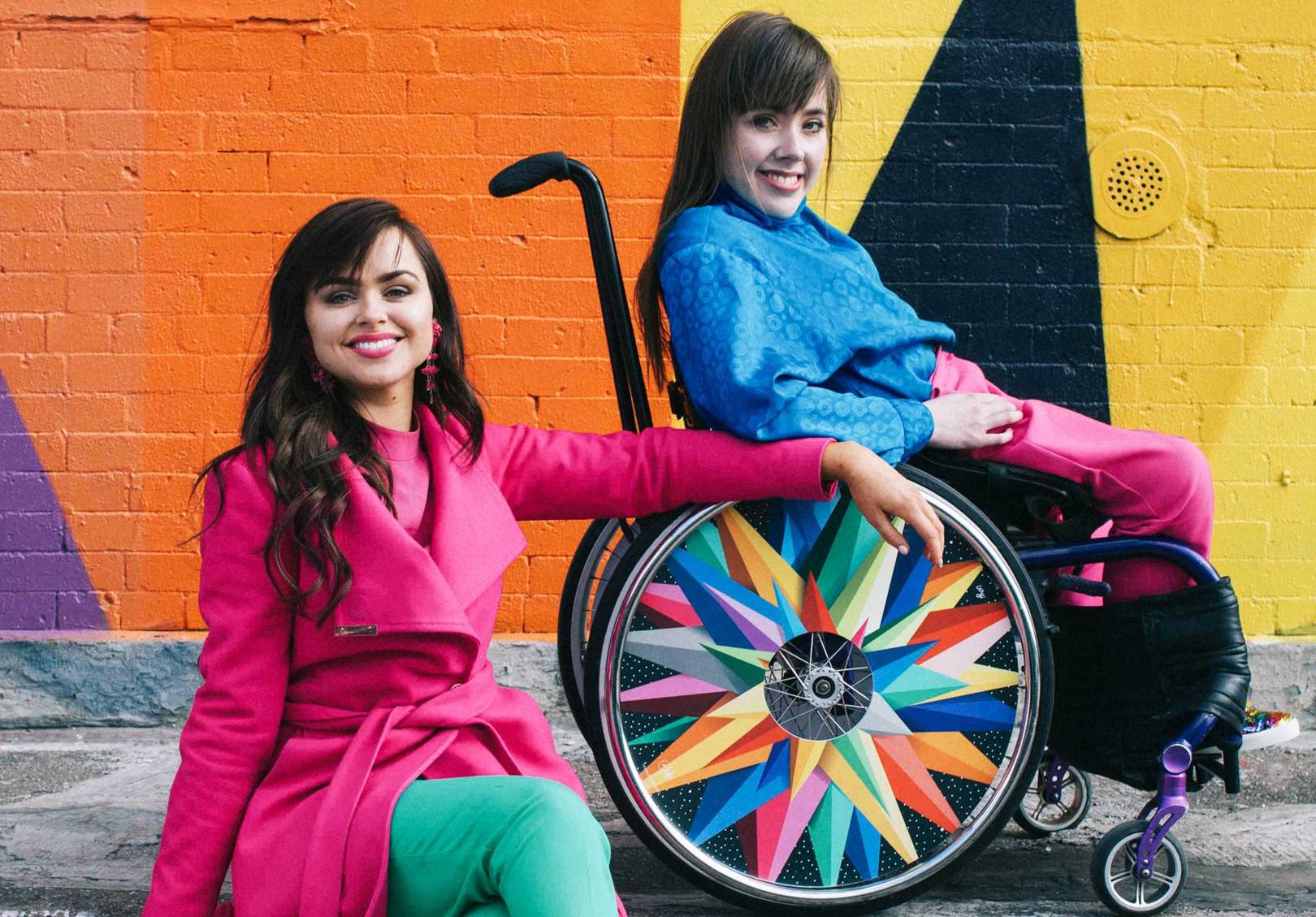
“If you can’t stand up, stand out.”
The motto of our final speaker Ailbhe and Izzy Keane. The approach to creativity took a different outlook here. Before if was all about making products, suiting the clients & making profit. But for Izzy Wheels it was about using your creativity to help others. Ailbhe always knew she had creativity. In her final year at National College of Art and Design, she had to create a project. Ailbhe decided to design her sister’s wheelchair, like she used to do when she was young. The success of her project started Izzy Wheels.
Creativity springs from every part of this business venture. Izzy Wheels allow wheel chairs users across the world express who they are, helping them to feel confident in their chair. This creative nature helps bring diversity among the users as hospitals supply only a limited permanent option. It began with only Ailbhe’s designs but the company have became so well known, other artist have begun to design the wheels.
Ailbhe Keane used her creativity in order to help others , she has continued to do so donating percentages of the companies profits to wheel chair communities as they have a 67 million market. This creative venture has produced a innovative unique company who have been featured in Cosmopolitan, British Vogue and Forbes 30 under 30.
The creativity doesn’t stop there. Izzy Wheels uses social media in a excellent way as a form of marketing and raising awareness. Each wheels design has a different story. Izzy Wheels have made brand ambassadors throughout the the 35 countries. They have created a trend where people get to tell their story of their wheels over social media, which gains huge reviews and thus raising awareness to the wheel chairs users across the world that they aren’t alone, You can stand out too.
Although Izzy Wheels is a young business. These girls have blown creativity away. They have thought me that not all projects have to be a money driven. Simple ideas personal to you is perfect. Creating can be done in all shapes and sizes and nothing can hold us back.
Make sure to give IzzyWheels a good stalk on instagram and see for yourself….
That comes to the end of my blog post. Hope you enjoyed it and have taken some valuable points away with you, just as I did.
So you know what that means…….
Lets role the dice onto Get Digital !!!!
SEE YOU SOON.

 3sidestothisdice